Delicious 45-Min Minestrone Soup Recipe You’ll Crave in 2026

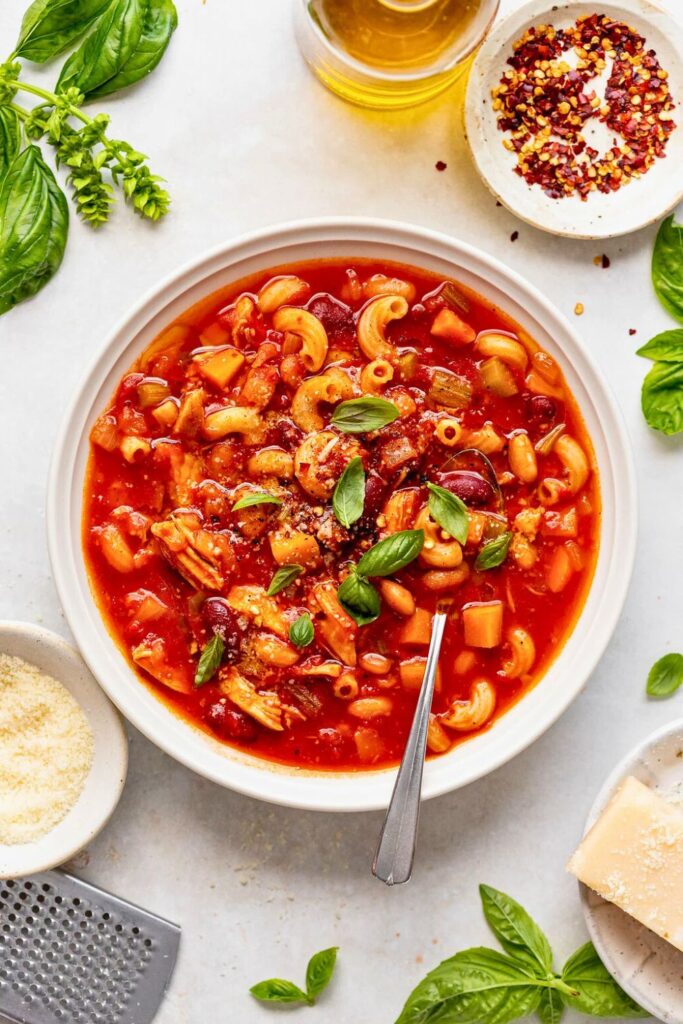
This Minestrone Soup Recipe is the ultimate Italian comfort food. It’s hearty, healthy, and surprisingly easy to make at home.
The base is simple: onions, carrots, and celery slowly cooked in olive oil. Add beans, pasta, and a parmesan rind, and suddenly humble ingredients transform into something extraordinary.
Minestrone isn’t just soup. It’s a warm hug in a bowl. It fills the kitchen with rich aromas, brings people together at the table, and tastes even better the next day.
Best of all? It’s affordable, family-friendly, and freezer-friendly. Make a big batch once, and you’ll have a nourishing meal ready for busy weeknights or cozy weekends.
What Is Minestrone Soup?
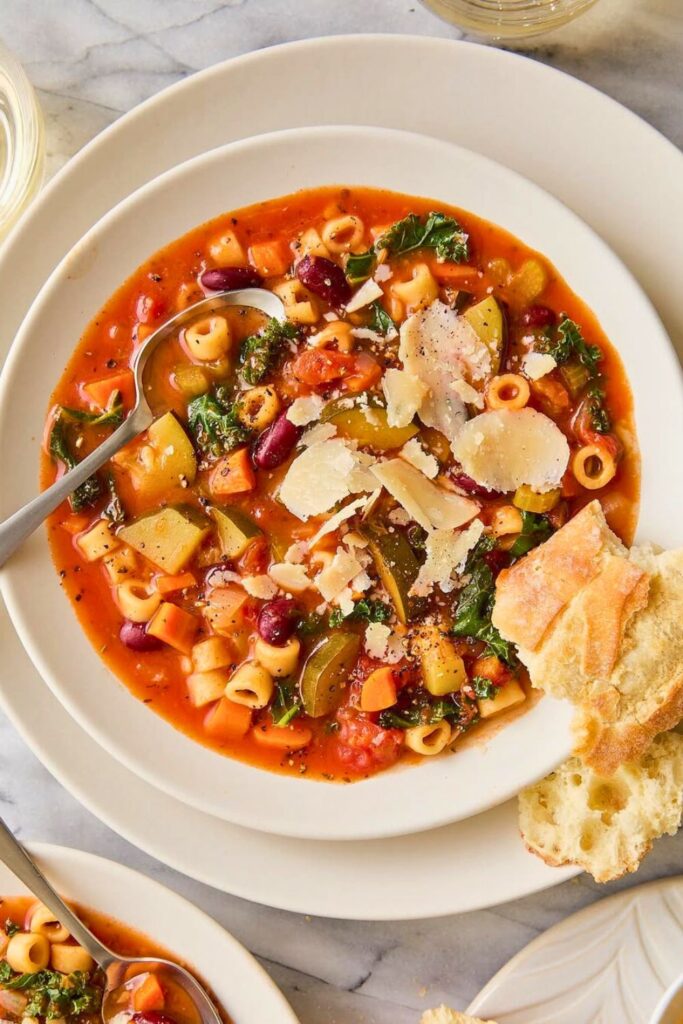
Minestrone is one of Italy’s most famous comfort foods and for good reason. Unlike soups that stick to one “right” recipe, minestrone is more of a flexible framework.
It’s a hearty, vegetable-based soup where you can add almost anything you have on hand, making it both affordable and customizable.
At its heart, minestrone is:
- Vegetable-rich carrots, celery, onion, potatoes, pumpkin, and broccoli form the backbone.
- Protein-packed beans and lentils add body, texture, and nutrients.
- Flavor-layered sofrito (carrot, celery, onion sautéed in olive oil) builds the foundation, while rosemary and parmesan rind bring depth and richness.
- Comforting & hearty small pasta like ditalini turns it from “just a soup” into a filling one-pot meal.
Ingredients You’ll Need
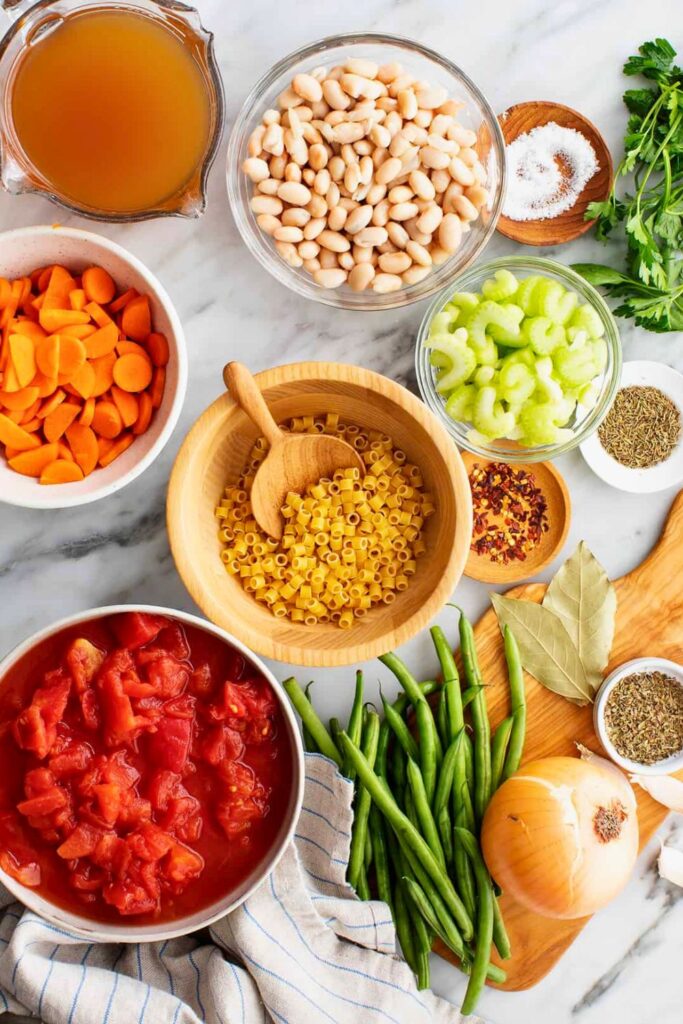
These are the suggested ingredients, but remember, minestrone is endlessly flexible. So you can swap or add what you like.
| Category | Ingredient | Notes & Purpose |
| Vegetables | 2 carrots | Chopped small for even cooking. |
| 1 celery stalk | A key part of the sofrito flavor base. | |
| 1 red onion | Adds sweetness and depth when sautéed. | |
| ½ small pumpkin | Cut into cubes; adds starch and creaminess. | |
| 2 potatoes | Chopped small; provide starch and heartiness. | |
| 1 broccoli head | Adds color and freshness; cut into bite-sized florets. | |
| Tomatoes | 2 small cans diced tomatoes (800 g) | Adds acidity and body to the broth; fresh tomatoes can be used if available. |
| Beans & Legumes | 1 small can mixed beans (400 g) | Source of protein and fiber; adds bulk. |
| 1 small can of lentils (400 g) | Soft texture and extra protein. | |
| Herbs & Garnish | Fresh parsley (chopped) | Stir in for freshness and garnish before serving. |
| Fresh rosemary sprigs | Infuses an earthy aroma when cooked in the sofrito and broth. | |
| Seasoning & Fat | Extra virgin olive oil (generous) | The flavor backbone is used for sofrito and finishing drizzle. |
| Salt & black pepper | It is essential for seasoning throughout the cooking process. | |
| Pasta & Cheese | Small pasta (ditalini recommended) | Traditional pasta for minestrone makes it a filling meal. |
| Parmesan rind | Adds deep umami, richness, and creaminess to the soup. |
👉 Tip: Save parmesan rinds in the freezer or ask your local deli, they add incredible flavor when simmered in the soup.
How to Make Minestrone Soup
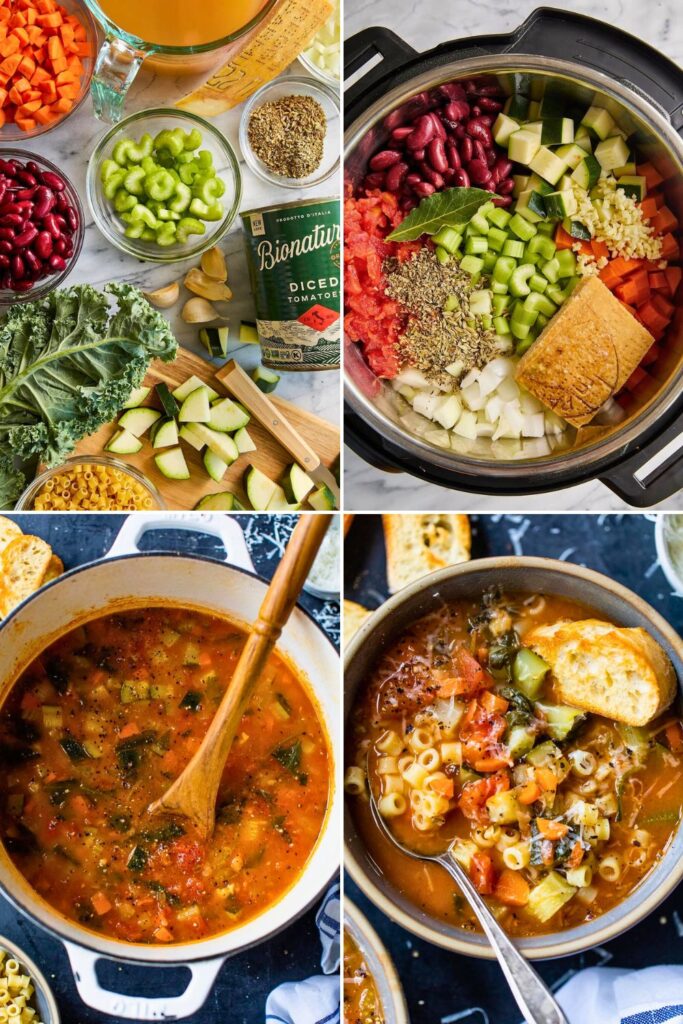
Unlike quick soups, where everything goes into the pot at once, minestrone is about layering flavors and textures. Each step matters, from chopping the veggies evenly to slowly simmering beans and pasta until they “make love together”.
Here’s the complete breakdown:
Step 1: Prepping the Vegetables
The foundation of a good soup begins before you even turn on the stove.
- Uniform chopping is key. The cook emphasizes cutting the carrots, celery, and onion all the same size. This ensures they cook evenly and no single veggie overpowers the others.
- Carrots, potatoes, celery, and onion → small cubes for consistency.
- Pumpkin → slightly larger chunks are fine, but keep them bite-sized.
- Broccoli → naturally breaks into uneven florets, so just aim for small, spoon-friendly pieces.
Even chopping isn’t just about looks; it helps balance flavor in every spoonful. Imagine scooping soup and always getting the perfect mix of soft potato, sweet carrot, and tender pumpkin. That’s the magic of prep.
Step 2: The Sofrito (The Flavor Base)
Every authentic minestrone begins with sofrito, the Italian trio of onion, carrot, and celery sautéed in olive oil.
- Heat a generous splash of extra virgin olive oil in a large pot. The stress being generous; the oil isn’t just cooking fuel, it’s flavor.
- Add carrots, celery, and onion to the pot.
- Toss in a sprig of fresh rosemary and let it lightly fry. This unique tip pulls out rosemary’s earthy oils, infusing the base with depth.
👉 Trick: If the sofrito begins to dry out, splash in a little water and cover with a lid. This steams the veggies while preventing burning. After 10 minutes, you’ll have a softened, fragrant base that smells like the start of something special.
Step 3: Building the Soup
Now that the foundation is set, it’s time to bulk up the soup with hearty vegetables.
- Stir in the potatoes and pumpkin. These starchy veggies give minestrone its body.
- Add another drizzle of olive oil if needed (again, generosity is the rule here).
- Pour in enough water to cover the vegetables. The cook explains you don’t need store-bought stock; the soup essentially makes its own stock as it simmers.
- Bring the pot to a medium-high simmer for 10–15 minutes. This allows the potatoes and pumpkin to soften slightly without falling apart.
Think of this step as letting the veggies “get to know each other.” It’s the first point where their flavors start to mingle into the broth.
Step 4: Adding Tomatoes & Broccoli
Time to bring in acidity, sweetness, and more freshness.
- Add the diced tomatoes. Canned tomatoes are easier, but fresh ones work if you’ve got them from the garden.
- Stir everything well, then pour in more water to keep the veggies fully submerged.
- Add the parmesan rind for umami richness, and drop in another sprig of rosemary.
- Toss in the broccoli florets.
👉 Seasoning checkpoint: This is the first big moment to add salt and pepper. Be generous, the flavors will balance out as everything simmers.
Cover the pot with a lid and let it simmer for about 10 minutes. Keeping the lid on traps steam and helps build a rich, flavorful broth without losing too much liquid.
Step 5: Beans, Lentils, and Fresh Herbs
This step is where the soup transforms from a veggie broth into a hearty meal.
- Add the mixed beans and lentils. These not only boost nutrition but also thicken the soup naturally.
- Stir in some chopped parsley for a touch of color and freshness.
- If the soup looks too thick, add water until everything is comfortably covered.
Let it cook for about 20 minutes on medium-high heat, stirring occasionally. Stirring matters here keeps heavier vegetables from sinking and sticking to the bottom while ensuring beans and lentils distribute evenly.
👉 Why this matters: Beans and lentils soak up the tomato-rich broth, softening into little bursts of flavor that make every bite more satisfying.
Step 6: Pasta Time!
Now comes the defining step: adding pasta.
- Stir in small pasta (ditalini recommended).
- Cook the pasta 2–3 minutes less than the package instructions.
- Stir frequently so the pasta doesn’t sink and stick to the bottom. Vegetables are heavier and can “suffocate” the pasta at the bottom of the pot.
Pasta releases starch as it cooks, which thickens the broth naturally. This transforms the soup from a brothy vegetable stew into a silky, rich dish that clings to every spoonful.
Step 7: Taste, Adjust & Serve
The final touches are what make minestrone unforgettable.
- Check the seasoning. Add more salt if needed; the potatoes, beans, and pasta all absorb flavor, so don’t be shy here.
- Drizzle in a little extra virgin olive oil just before serving for richness.
- Let the soup rest for 5 minutes. During this time, the pasta plumps up, the parmesan rind continues to melt, and the flavors marry into perfection.
Serve hot in large bowls, topped with fresh parsley and (if you like) grated parmesan.
Tips for Making the Best Minestrone Soup

Here are five must-follow tips:
1. Be Generous with Olive Oil
Don’t skimp on the extra virgin olive oil; it’s the backbone of flavor in minestrone. From sautéing the sofrito to drizzling at the end, olive oil adds depth, richness, and that signature Italian touch.
2. Use a Parmesan Rind
The cook insists this is a non-negotiable ingredient. Parmesan rind melts slowly into the broth, releasing savory, umami notes that transform the soup. Save rinds in the freezer or ask your deli if they sell them.
3. Cut Vegetables Evenly
Uniform chopping ensures consistent cooking and balanced flavor. The carrots, celery, onion, and potatoes should all be about the same size, while the pumpkin can be a little bigger. This way, every spoonful has the right mix.
4. Cook Pasta Slightly Underdone
Minestrone isn’t complete without pasta, but there’s a trick: cook it 2–3 minutes less than the package says. The pasta will continue cooking in the hot broth, preventing it from turning mushy.
Serving Suggestions for Minestrone Soup
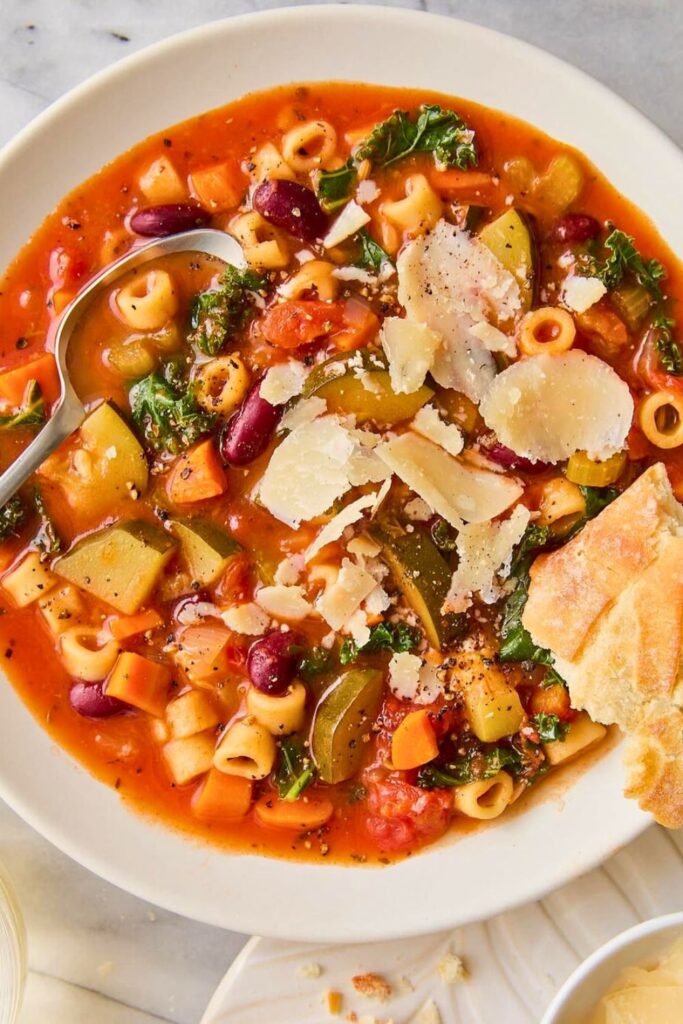
Minestrone isn’t just about what’s in the pot; it’s also about how you serve it. Here are some inspired ways to make each bowl even better:
- Classic Touch: Ladle the soup into wide, deep bowls and sprinkle with chopped fresh parsley for color and brightness.
- Cheese Finish: Add freshly grated Parmesan or pecorino on top.
- Extra Olive Oil: A drizzle of cold extra virgin olive oil before serving gives a silky finish and intensifies flavor.
- With Bread: Serve with thick slices of crusty bread or focaccia for dipping. The broth clings beautifully to the bread, making every bite satisfying.
- Family-Style: Place the pot on the table and let everyone serve themselves. Minestrone is all about bringing people together, and sharing straight from the pot captures that spirit.
- Freezer-Friendly Portions: Cook a big batch, serve fresh, then freeze the rest in containers. Reheat later with extra water to bring it back to life.
Variants of Minestrone Soup
Here’s a table of common variants and ingredient swaps:
| Variant | Key Changes | Why Try It |
| Classic Minestrone | Carrots, celery, onion, potatoes, pumpkin, beans, lentils, pasta, parmesan rind | Traditional balance of starch, protein, and umami. |
| Green Minestrone | Add zucchini, spinach, kale, or green beans | Fresher, lighter, packed with leafy greens. |
| Rustic Minestrone | Add cabbage, pearl barley, or farro instead of pasta | Hearty, chewy grains give a countryside feel. |
| Bean-Heavy Minestrone | Double the beans, skip the pasta | Protein-rich and naturally gluten-free. |
| No-Tomato Minestrone | Skip diced tomatoes, add extra pumpkin and stock | Sweeter, mellower version for tomato-sensitive eaters. |
| Winter Minestrone | Use root vegetables (parsnip, turnip, sweet potato) | Deep, earthy flavors are perfect for cold weather. |
| Summer Minestrone | Use fresh tomatoes, zucchini, and basil | Lighter, garden-fresh variation ideal for summer. |
| Vegan Minestrone | Omit parmesan rind, finish with nutritional yeast | Plant-based but still flavorful and hearty. |
Conclusion: A Bowl Full of Love
Minestrone is more than just soup; it’s a tradition, a way of bringing people together, and proof that humble ingredients can create extraordinary comfort.
Every spoonful carries warmth, nourishment, and flavor. Whether you enjoy it fresh off the stove, the next day, or from a freezer stash on a busy weeknight, it’s a recipe you’ll come back to over and over.
So grab your biggest pot, chop up those veggies, and let them “make love” together on the stove. Your kitchen is about to smell like an Italian trattoria, and your family will thank you with every bite.
Recommended Soups to Try Next
If you enjoyed this hearty Italian soup, you’ll love these other comforting favorites:
- 🍲 20-Min Prep Vegetable Beef Soup Recipe for Families – A quick, wholesome option packed with veggies and tender beef, perfect for busy nights.
- 🧀 Easy Cheeseburger Soup Recipe for Weekends – Creamy, cheesy, and oh-so-satisfying, this one is a hit with kids and adults alike.
- 🍅 Best Hamburger Soup Recipe for Cozy Family Dinners – A simple, budget-friendly soup that’s both hearty and comforting, great for weeknight meals.
👉 Save these recipes for later and build your own cozy soup collection that keeps your family warm all year round.